I’m a calligrapher, so I was replaced by the printing press in 1440.
It was a joyful day. No longer would scribes have to toil over dippy ink pots, labouring over letters so the educated elite could rule the rest of us with bibles. With the printing press, newspapers could take over the world.
I mean, for a few hundred years that was all good, then the newspapers got taken out of the game by the internet.
Then the internet’s online news got taken over by the rich elite again, and before I sound too much like a conspiracy theorist I’ll skip to my point: that we’re all scared of what AI will do to our jobs and creativity.
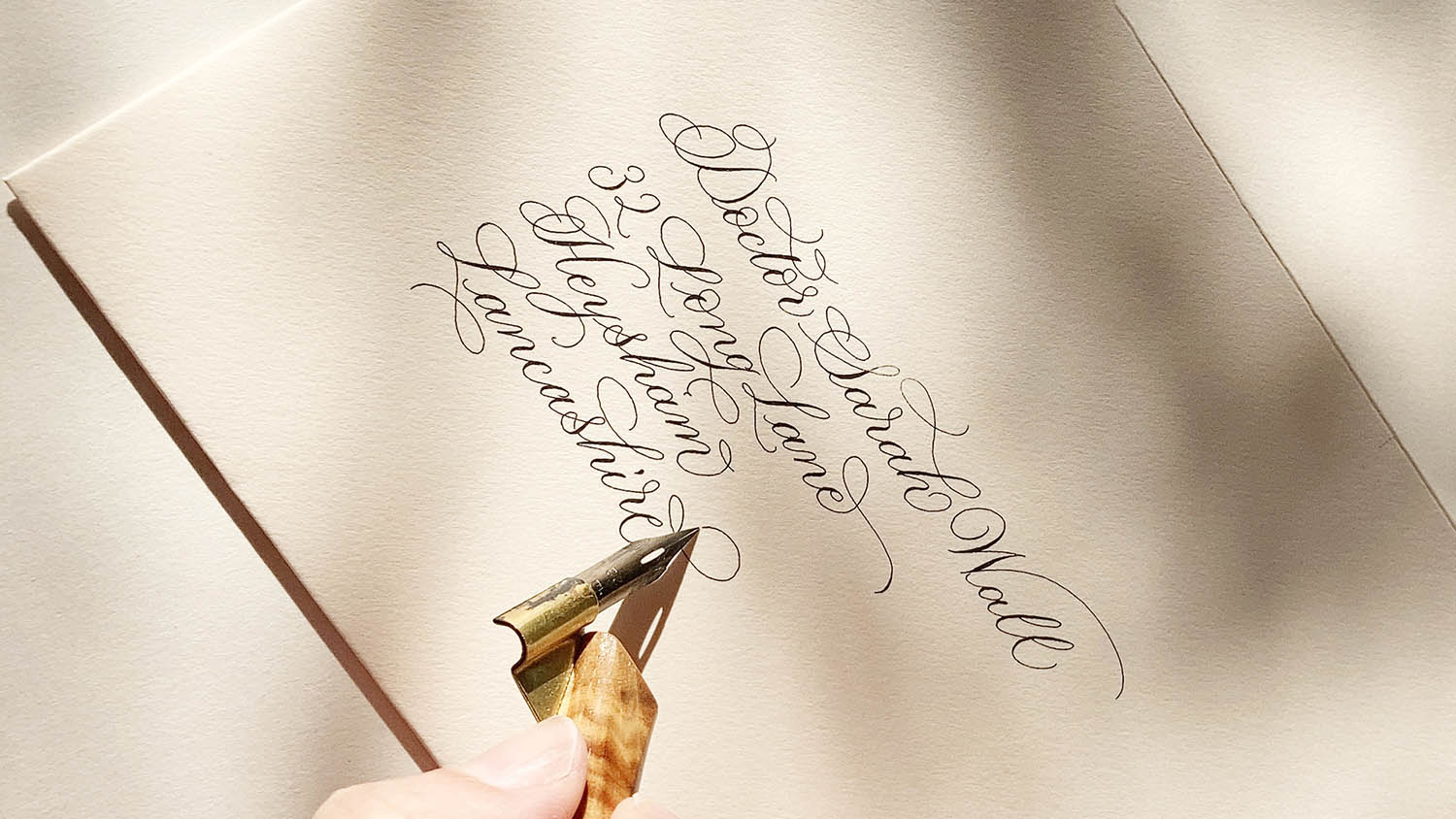
But I’m a calligrapher, and I’m still here.
I still use a dippy ink pot.
I still use a metal nib, which I squish into the end of a wooden penholder, and this is the work I do on a daily basis – because people still want beautifully crafted, human-written pieces of lettering art.
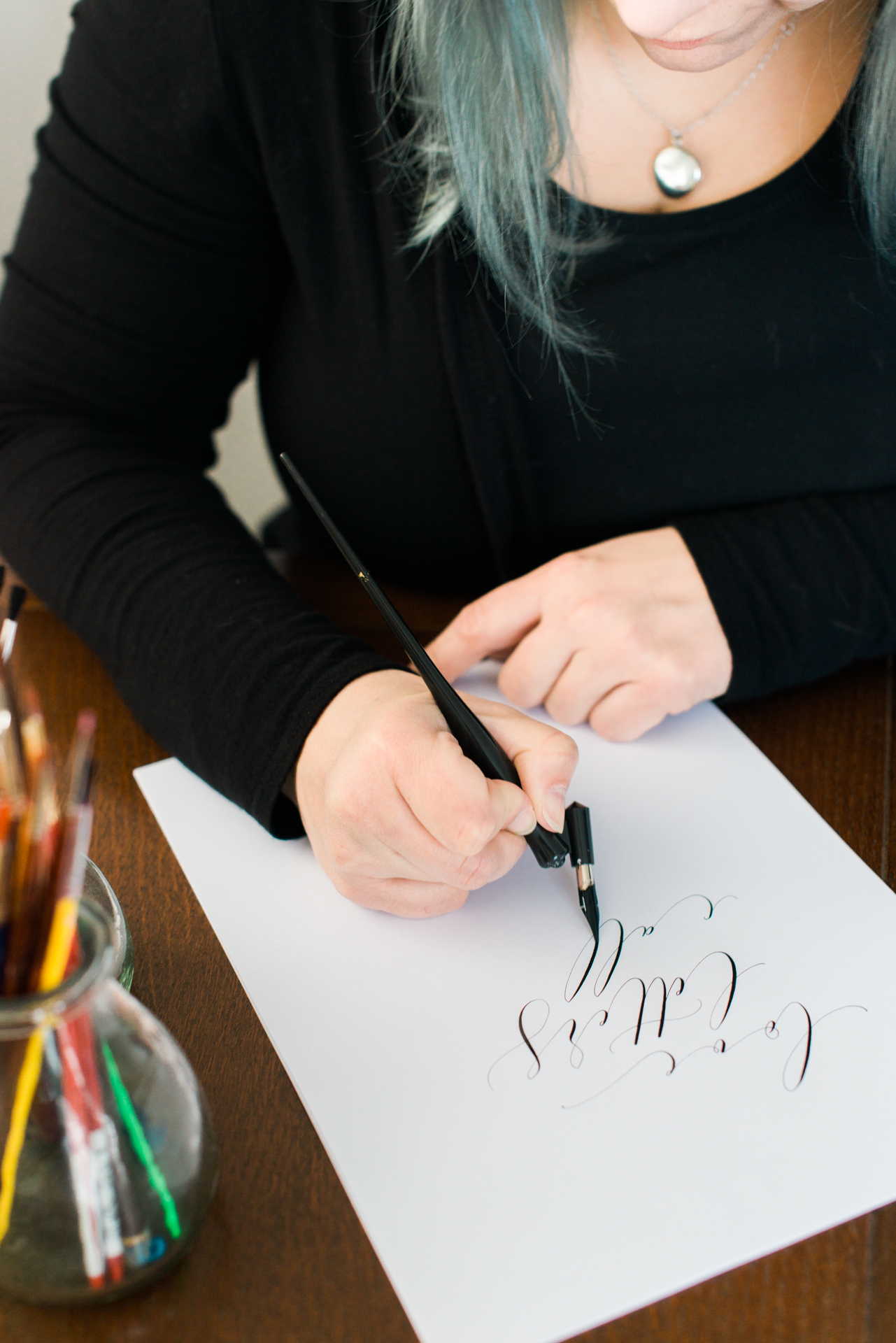
It used to annoy me when people would say my calligraphy looked “so good it could have been printed”. (Second only to “what font do you use?”)
I understand the compliment though.
The art of calligraphy is understanding the patterns inside swoops and swirls that make a piece of lettering or an artful poem look beautiful.
It’s about balancing and playing with the rhythm and spacing of words on a page.
It’s about seeing words which have meaning when spoken aloud, and giving them human emotion through expertly hand made letter strokes.
The human touch is still treasured. And when a piece of writing needs to elicit emotion, so you feel something when you look at it, calligraphy brings the feels.

Calligraphy is infinitely more beautiful than printed lettering.
And FYI there is no such thing as “printed calligraphy”. Calligraphy is a craft made by human hands. The closest thing you’ll get from your computer printer is a “nice font”. It doesn’t even sound interesting.
If you’re lucky enough to have a handwritten letter from a great-grandparent, treasure it forever. Not many of us are privileged enough to own anything so special.
I’ve heard stories of handed-down, handwritten family recipes, and to me they’re the greatest keepsakes of generational history.
Why? Because handwritten letters and calligraphy are personal. They hold something of the writer – always.
It’s natural, perhaps instinctive.
As humans, we’re drawn to human created artwork: the strokes might not be perfect, but there’s life in them.
This is why a handwritten letter will always outshine a printed email. (Why not write one to someone you love?)
It’s why wedding invitations in calligraphy or hand addressed envelopes are still popular in 2026, and why AI-generated invitation suites are soulless in comparison.
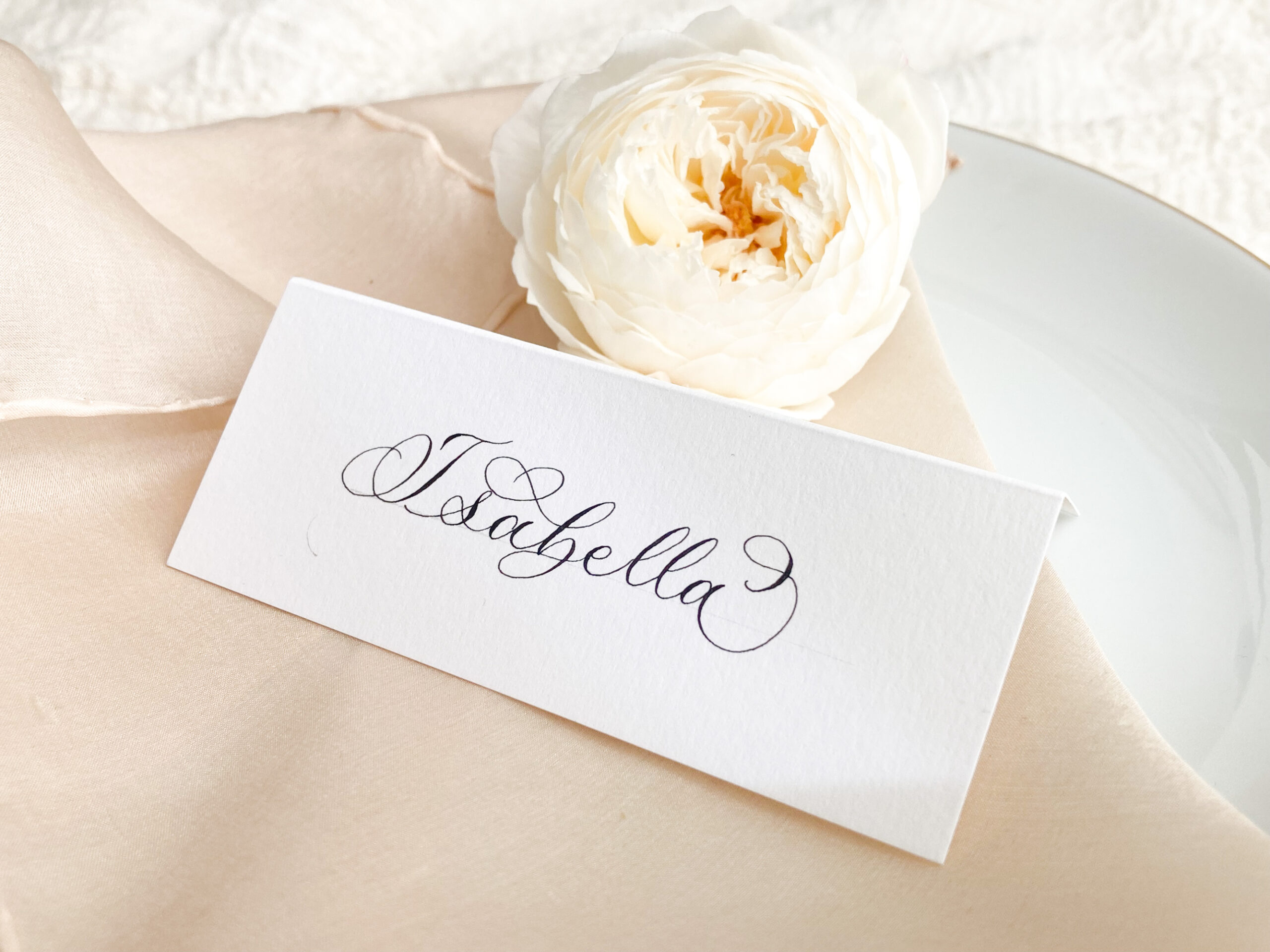


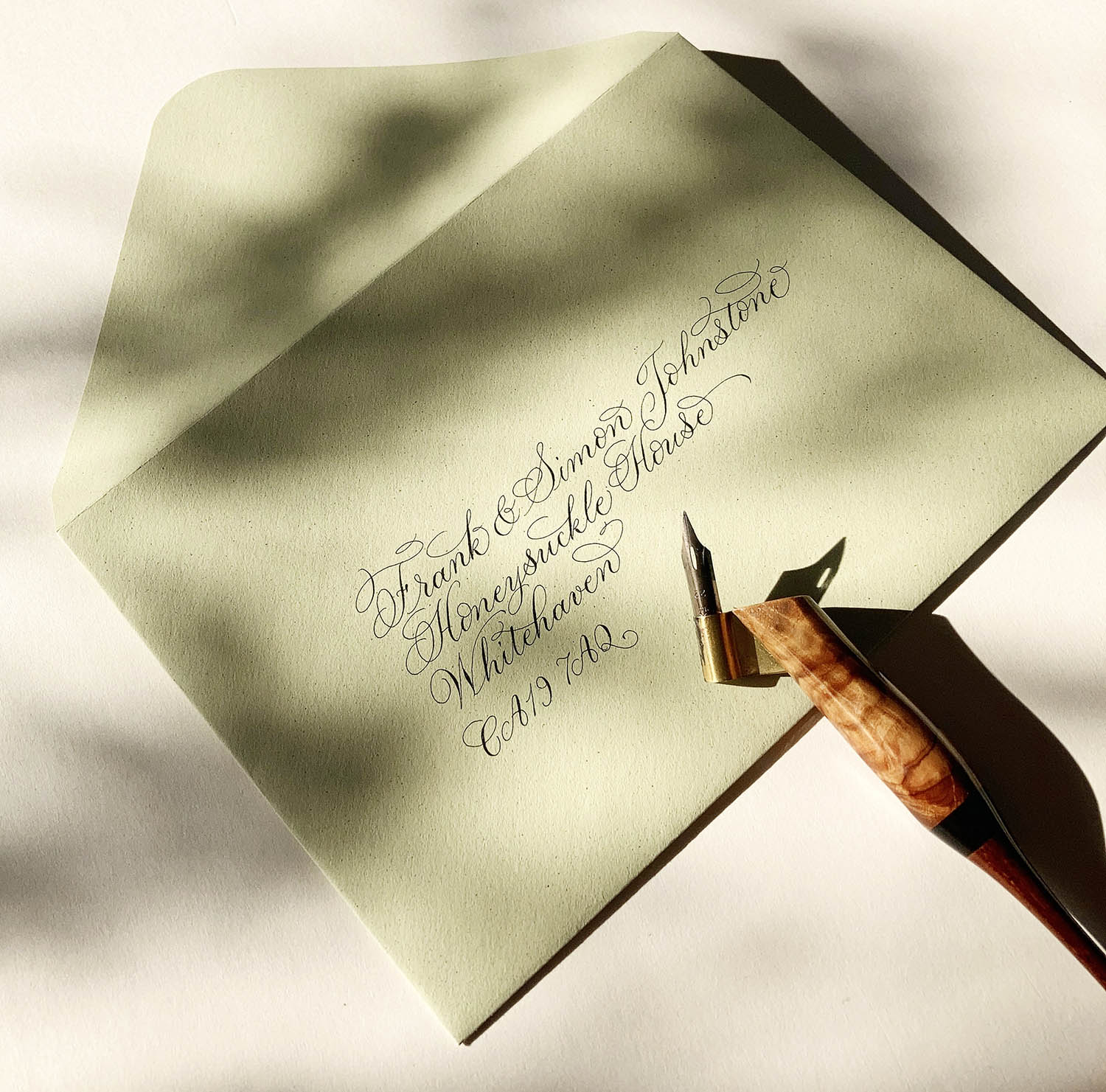
The personal touch elevates words and makes them special.
It’s why handwritten invitations are still a thing, five hundred and eighty-six years after the invention of the Gutenberg press, and three hundred and eighty-four years after the middle classes got their hands on printed wedding invites. (I’m still here wielding my dippy ink pen for engaged couples 11 years after Canva was launched!)
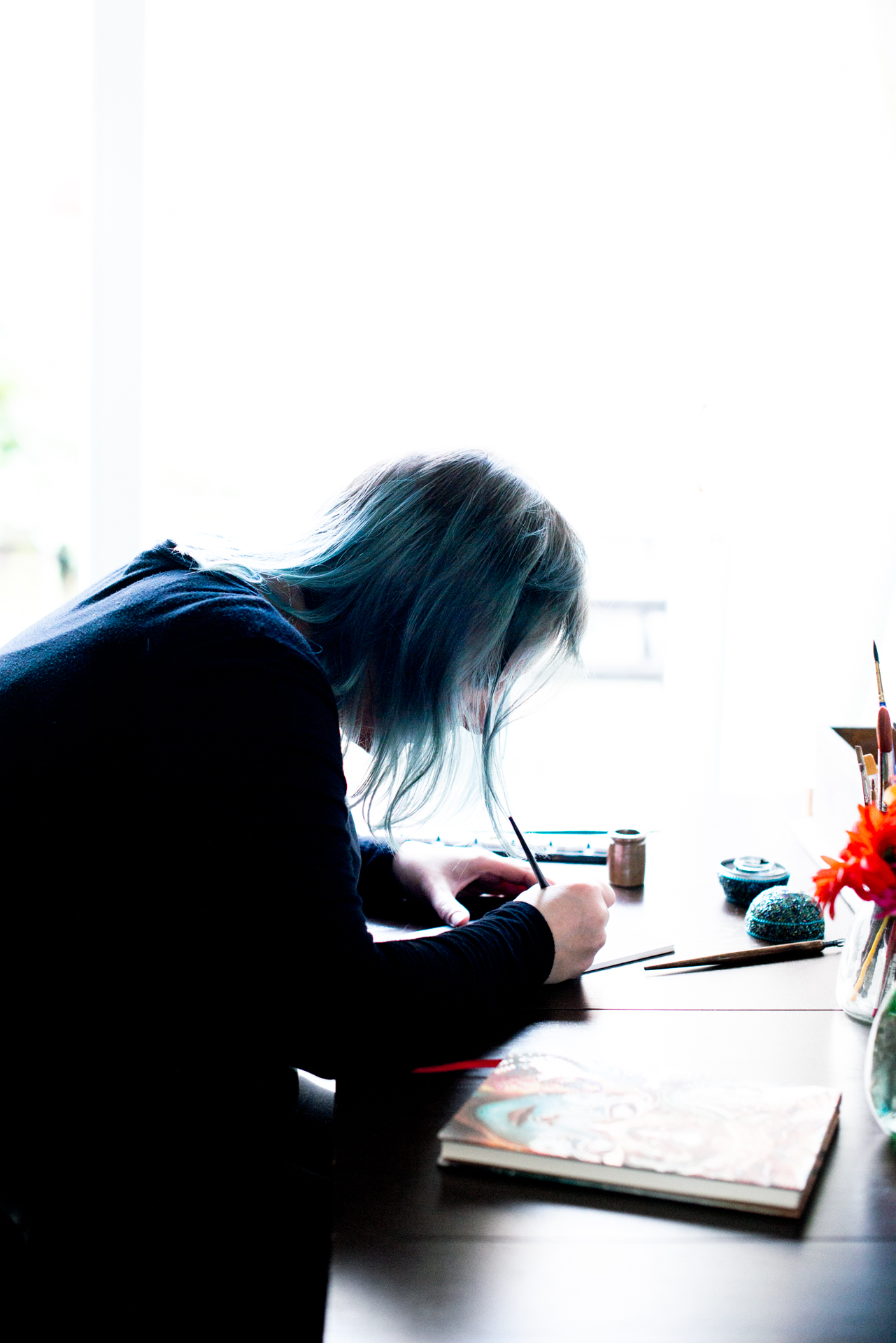
As the online wedding world embraces a shift towards meaningful ceremonies and personal celebrations, calligraphy is a perfect fit.
While couples are using AI for the admin side of wedding planning, the personal touch is what really shines on the day.
And the moral of my little story?
When technology tries to make your creative skill obsolete, hold on to your humanity.
The (weird, don’t you think?) days of early AI are an opportunity for craftspeople, artists and calligraphers to shine more brightly.
by Claire (a human being, writing with a bit of metal on a stick, since 2005).
